Codex: Ready to Take Over Everything for Programmers
The launch of the Codex plugin market is not just a simple feature enhancement; it signifies the official entry of AI development tools into real workflow environments. By integrating key services like GitHub, Gmail, and Cloudflare, Codex is transforming from a code generator into a workflow hub, encapsulating team experiences into reusable digital assets. This seemingly delayed catch-up is actually OpenAI’s strategic positioning in the developer ecosystem.
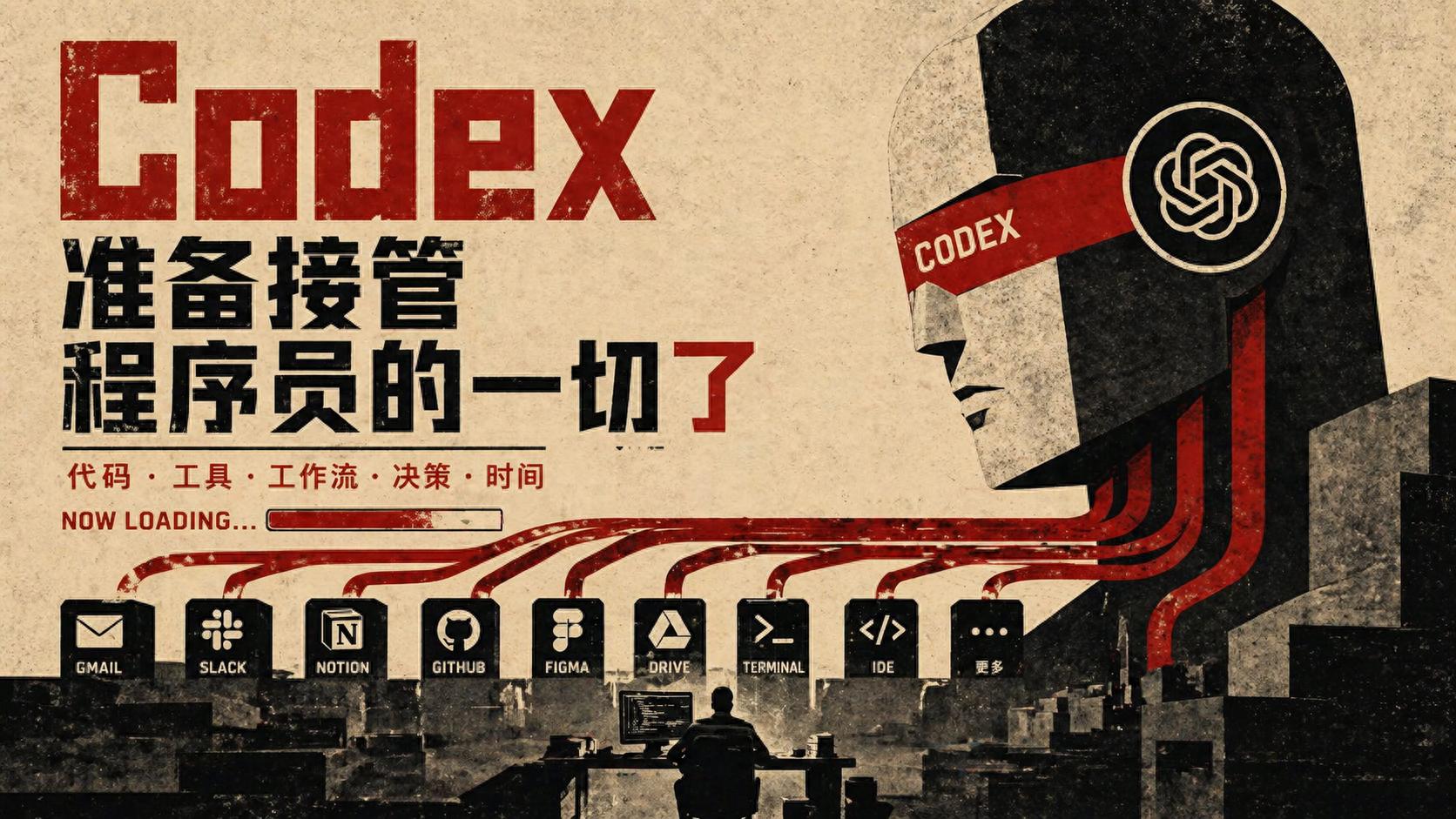
When I first heard about the Codex plugin market, my initial reaction was not excitement, but rather a chuckle. At first glance, it seemed like OpenAI was playing catch-up. Claude Code has long been working on plugins, skills, and MCPs, while Gemini CLI is also moving in that direction. Now that Codex has finally introduced its plugin market, doesn’t it feel a bit late?
However, after some reflection, I realized that this development should not be viewed merely as a catch-up.
The introduction of plugins is not just about enhancing Codex’s capabilities; it addresses a more pressing issue: how to genuinely integrate AI into our workflows.
Previously, when using Codex or Claude Code, we often treated them as exceptionally smart programmers. You would hand over a repository for it to fix bugs, write tests, or help refactor code. Its effectiveness depended on its ability to understand the project, minimize errors, and execute tasks successfully.
But real work is not like that.
In reality, you don’t start by writing code. You first check GitHub, review product documentation, inquire about who raised a particular requirement, and see if there are any supplementary notes in WeChat or Feishu. After writing, you need to run CI, check if the Vercel deployment is successful, and ensure there are no issues with Cloudflare configurations. Sometimes, the bug isn’t even in the code but in vague feedback from a customer email.
This is the everyday reality for ordinary developers.
It’s not about “please help me implement a high-performance caching system”—that’s a textbook question.
Instead, it’s about “the customer said it crashed again last night, but they can’t specify where; please check the logs, PRs, deployment records, and that email to see if it’s related to the changes we made last week.”
If Codex only stays within the code repository, it can only assist with part of the process. But if it can connect through plugins to GitHub, Gmail, Box, Cloudflare, and Vercel, it has the opportunity to link the information before and after.
This means it’s not just about writing code anymore.
It starts to function like a real colleague sitting next to you.
Of course, when I say “like,” I don’t mean it has already achieved that. It still has a long way to go, and we shouldn’t rush to imagine it can replace you at work tomorrow. Honestly, I’ve always been wary of such agents; they look impressive during demos but often stumble at the first authorization step, throw errors at the second, and leave you questioning your sanity by the third.
But the significance of the plugin market lies here.
These capabilities were not impossible to achieve before. Advanced users have long been able to configure MCPs, write custom commands, maintain scripts, and even embed internal processes into configurations. The problem was that this setup felt too much like DIY.
You needed to know how to configure it, where things might break, where to place tokens, and why a sudden service upgrade caused connectivity issues.
This is not something an average user can maintain long-term.
Plugins push this forward.
They take workflows that were previously cobbled together by a few advanced users and package them into something easier to install, replicate, and distribute within teams.
This change is quite practical.
For example, in a small team, an experienced developer might be very familiar with the release process. They know when a release can happen, what checks need to be performed beforehand, which Cloudflare configurations are sensitive, and which Vercel environment variables have caused issues in the past. How were these experiences shared before?
- Through verbal communication.
- Through documentation.
- Through newcomers learning the hard way.
- Through late-night discussions after an online issue arises, leading to a hasty update of the process.
But if these experiences could be packaged into a Codex plugin or a set of skill configurations, newcomers wouldn’t have to memorize the inherited processes for half a month. Codex could at least remind them according to team habits, assist them in checking, running, and helping them avoid some pitfalls.
This is the most valuable aspect of plugins.
They don’t just sell a button; they sell compressed experience.
So while OpenAI is indeed catching up to Claude Code, the target isn’t just the “plugin market” feature. What they are truly pursuing is the entry point into developer workflows.
Whoever can position themselves at that entry point has the chance to become the most frequently accessed tool.
This is also why Claude Code has recently gained so much popularity. Many developers appreciate it not just because it can write code, but because it increasingly resembles a tool that can be tailored to their working habits. You can set rules, skills, and permissions for it, allowing it to work in your preferred manner.
Codex is now also moving in this direction.
Moreover, OpenAI has a significant opportunity: it doesn’t necessarily have to serve only the hardcore programmers.
Claude Code has a more developer-centric vibe, and many users appreciate it for this reason. However, if Codex can successfully develop its plugin market, it might attract a broader user base.
- Not everyone wants to delve into MCPs.
- Not everyone is willing to tweak configurations at midnight.
- Not everyone wants to understand why a missing comma in a JSON file can cause everything to break.
Many people simply want to click install and have Codex read their GitHub, check their deployments, review their documentation, and work according to their company’s processes.
This demand is not advanced at all.
In fact, it’s very basic.
But the more basic it is, the larger the market.
Of course, there are significant risks here.
Especially once plugins connect to services like Gmail, Box, Cloudflare, and Vercel, the situation becomes more than just “the code is wrong.” It might access emails, files, deployment permissions, and internal company data. An assistant that modifies local code might only require a rollback if it makes an error. However, an assistant that connects to external services could potentially escalate issues.
Therefore, the competition ahead is not about who has more plugins.
- It’s about whether users are willing to authorize.
- Are they willing to let it read emails?
- Are they willing to allow it to handle deployments?
- Are they willing to let it access internal systems?
This trust cost is far more challenging than the functionality itself.
This is why I find the Codex plugin initiative intriguing. On the surface, it appears to be a product update, but beneath it lies a more significant question: how can AI transition from a chat interface into real work environments?
We often talk about agents, but many agents are still stuck in demos. They can complete tasks in a clean environment, but the real world is anything but clean. In the real world, there are permissions, legacy systems, historical burdens, incomplete documentation, ambiguous requirements, last-minute changes from bosses, and configurations that no one knows why they can’t be altered.
For AI to be genuinely useful, it must learn to operate in such chaotic environments.
Plugins might be its first outreach.
Thus, my perspective on Codex plugins is somewhat complex. On one hand, it is indeed a catch-up; Claude Code has been ahead for some time. On the other hand, I believe this direction is correct, as it pushes Codex from merely being a code-writing model to a platform capable of supporting workflows.
In the future, what may truly hold value is not a specific plugin itself, but who can package their working methods.
Who can transform the knowledge and processes accumulated through experience, oral tradition, and learning from mistakes into executable workflows for Codex.
At that point, the plugin market will not only feature names like GitHub, Gmail, and Vercel.
It may include how a company conducts releases, how a team manages reviews, how a creator organizes materials, and how an operator handles customer feedback.
This is not just about coding applications.
It’s a mold for knowledge work.
Of course, it’s still early to say all this. The quality of plugins, whether the ecosystem can thrive, how to establish security boundaries, and whether ordinary users will embrace it all remain to be seen. OpenAI won’t automatically win by simply launching a market; the developer mindset is currently stronger with Claude Code.
But I believe this button is worth watching.
Because many significant changes initially don’t appear to be significant.
They often start by turning what experts can do into buttons that ordinary people are willing to press.
Codex plugins might just be such a button.
Once pressed, it connects not just to GitHub or Gmail.
It connects AI from “help me write code” to “help me get the work done.”
As the saying goes, unlimited competition fosters creativity!
Comments
Discussion is powered by Giscus (GitHub Discussions). Add
repo,repoID,category, andcategoryIDunder[params.comments.giscus]inhugo.tomlusing the values from the Giscus setup tool.