Xi Jinping’s Emphasis on Fundamental Research
Recently, General Secretary Xi Jinping attended a symposium in Shanghai focused on strengthening fundamental research and delivered an important speech. He emphasized that fundamental research is the source of the entire scientific system and the key to all technological issues. Greater efforts and practical measures are needed to enhance fundamental research, improve China’s original innovation capabilities, and further solidify the foundation for building a strong technological nation.
For a long time, researchers at Xi’an Jiaotong University have been committed to addressing national priorities, delving into fundamental frontiers, tackling difficult problems, and continuously solidifying the foundation for high-level technological independence and self-reliance, contributing to the construction of a strong educational, technological, and talent nation.
Starting now, the university’s media platform has launched a multimedia column titled “Strengthening Foundations Towards New Heights” to comprehensively showcase the original and disruptive innovative explorations of Jiaotong University’s scientific workers in fundamental fields, inspiring faculty and students to seize opportunities, face challenges, and achieve new breakthroughs and contributions.
Academician Zheng Nanning: AI is Moving Towards “Intelligent Civilization”
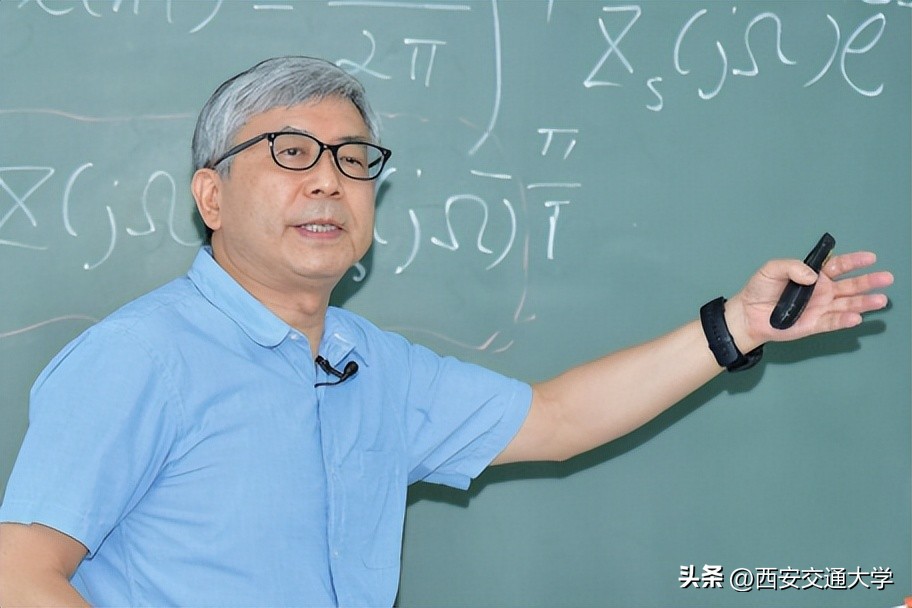
Zheng Nanning, an academician of the Chinese Academy of Engineering and director of the Artificial Intelligence and Robotics Institute at Xi’an Jiaotong University, has dedicated his career to advancing artificial intelligence (AI). He believes that AI will ultimately give rise to an “intelligent civilization,” provided that technology serves humanity rather than replaces it.
Zheng’s commitment to academic ideals translates into his deep expectations for his team’s future: in the “post-Zheng era,” he hopes the team can build a century-old institution in the field of AI that withstands the test of time.
What is the core research philosophy of your team? How has it been formed and refined over the long term?
Zheng Nanning:
In the autumn of 1985, I returned to my alma mater after studying in Japan. When the plane landed in Xi’an, I did not realize that this moment was not only a turning point in my personal fate but also the beginning of an era.
At that time, AI in China was still in its infancy, computers were not yet widespread, and algorithms had not become infrastructure. The concept of “intelligence” was still distant for many. In the spring of 1986, with the support of the university, we established the Artificial Intelligence and Robotics Institute in a modest lab on the second floor of the east building, driven by a nearly obsessive belief: to enable machines to perceive and understand the world like humans.
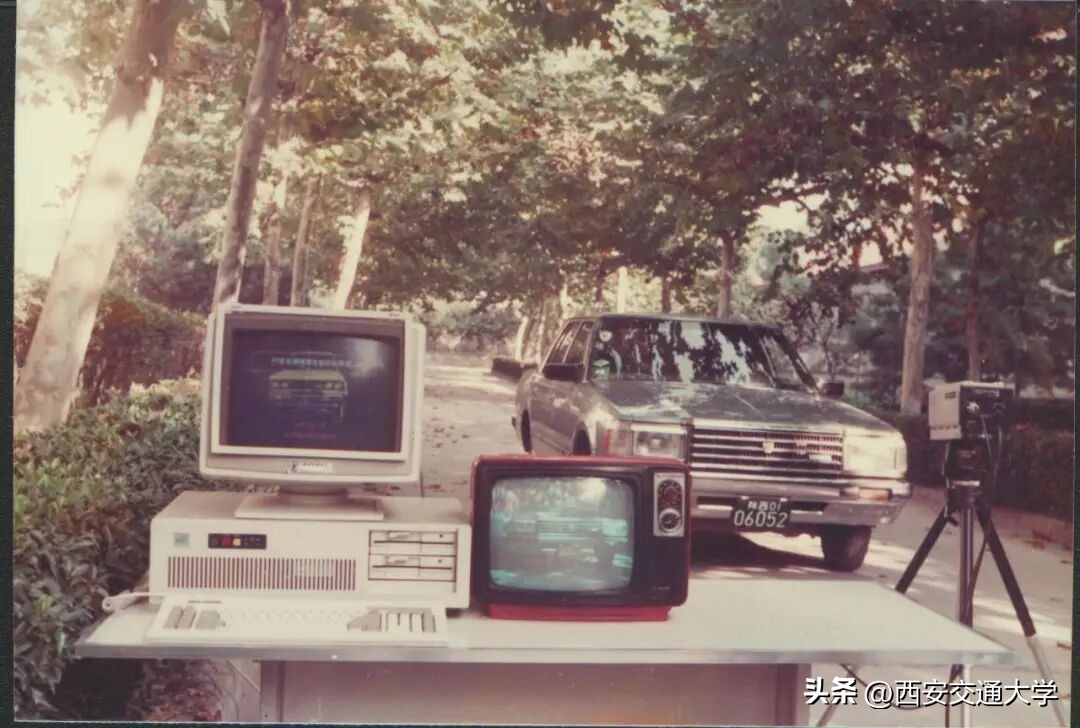
In the 40 years since, the institute has grown from a seed into a lush canopy. Throughout this journey, the team has consistently focused on a clear main line: the fundamental structure of intelligence is not isolated internal computation, but a dynamic closed loop formed between perception, decision-making, and the environment.
This main line stems from my background in control science. Control systems emphasize the relationship between input and output, and a dynamic feedback mechanism is essential for system stability and adaptability to environmental changes. From this perspective, AI is not just algorithms; it is an information processing capability, essentially reflecting an information organization structure.
This idea also comes from observing human cognitive behavior. For example, when we enter a room, we naturally look for a suitable place to sit without complex calculations, which reflects our cognitive ability regarding the environment. Therefore, our research has evolved from early visual perception to visual cognition and understanding, and finally to constructing a “world model” of the environment.
To express this idea more clearly, I summarize it as the PCC framework:
■ P stands for Perception,
■ C stands for Cognition,
■ The second C stands for Collaboration.
From a research perspective, we initially focused on visual perception and computation; after 2000, facing complex environments, we began to focus on how to enable intelligent systems to understand tasks and environments like humans. In the future, in an era of human-machine coexistence, we will emphasize “human-machine collaboration” rather than simple “machine replacement of humans.” The core of this system lies not in any specific technology or algorithm but in the long-term exploration of “what intelligence truly is.”
AI is an interdisciplinary field; what role do you think it plays in the development of disciplines?
Zheng Nanning:
AI research has distinct interdisciplinary characteristics, involving multiple fields such as computer vision, pattern recognition, cognitive science, neuroscience, control science, and data science.
This deep interdisciplinary integration promotes the continuous development of AI theory. Therefore, our team has emphasized the integration of multidisciplinary backgrounds from the outset, with members coming from control, computer science, software, mathematics, biology, and mechanical engineering. Interdisciplinary collaboration is reflected not only in organizational structure but also in the individual knowledge structures of researchers. An AI researcher must master their professional knowledge while also understanding cognitive science, neuroscience, computer tools, and platforms. In other words, researchers themselves should also be “interdisciplinary.”
For example, in our research on predicting the novel coronavirus, our team combined traditional epidemic models with Long Short-Term Memory (LSTM) networks and Natural Language Processing (NLP) to build a hybrid AI model, thereby improving prediction accuracy. This demonstrates the ability of interdisciplinary technological integration to solve practical problems.
What are the core technological directions in computer vision and AI that deserve attention in the next 5 to 10 years? What impact will they have on industries?
Zheng Nanning:
I summarize the most important directions for the next 5 to 10 years into six main lines, all converging towards a common goal: moving from “perceptual intelligence” to “cognitive intelligence” and “action intelligence.”
■ First, multimodal foundational models that enable machines to move from “seeing” to “understanding”;
■ Second, embodied intelligence and robotics that allow AI to move beyond screens and into the physical world;
■ Third, constructing world models to enhance AI explainability through causal reasoning and memory mechanisms;
■ Fourth, human-machine collaborative intelligence that shifts from “replacement logic” to “enhancement logic”;
■ Fifth, efficient intelligent computing, including edge AI, neuromorphic computing, and new visual hardware;
■ Sixth, AI for Science and intelligent complex systems, promoting AI applications in scientific discovery and knowledge innovation.
These directions point to an important trend: integrating data—model-driven intelligence with social systems, scientific discoveries, and domain knowledge. This will lead to profound changes in public health, energy, power grids, transportation, climate, and urban governance. In the next 5 to 10 years, the social structure will be reorganized due to AI, and employment forms will also undergo significant changes.
AI not only changes the physical world but also reconstructs human cognitive methods, while humans shape AI through demands and constraints, thus giving rise to a new “intelligent civilization”—the result of deep integration between human society and AI.
What challenges do you think exist in the development of AI in China? How is your team planning for future development?
Zheng Nanning:
China’s AI still has shortcomings in fundamental theories and key core technologies, particularly in high-end chips and foundational software. Based on the realities of the industry, I believe there are five main deficiencies:
- Weak underlying hardware and software ecosystem, insufficient autonomy across the stack;
- Lagging original theoretical innovation, with applications still outpacing theory;
- Incomplete high-quality data and evaluation systems;
- Insufficient autonomy in foundational software and toolchains;
- Weak capabilities for reliable large-scale applications, with many models remaining at the demonstration stage.
Team Development Path:
Based on long-term academic accumulation, our team has explored a distinctive path for China’s AI development: “Cognition-driven + Human-machine collaboration + Visual implementation.” Specifically:
■ Shift from perceptual algorithms to breakthroughs in cognitive visual systems;
■ Use hybrid enhanced intelligence to promote applications in high-risk industries and extreme environments;
■ Strengthen the deep integration of cognitive science, brain science, and physics with AI to address original theoretical shortcomings;
■ Integrate vision, language, knowledge, and domain mechanisms to develop “safe and trustworthy AI for complex environments or tasks”;
■ Promote collaborative design of “algorithms—chips—systems” to drive the coordinated evolution of autonomous software and hardware ecosystems based on application scenarios.
The key to future AI competition lies in whether we can first integrate perception, memory, causality, and collaboration to build trustworthy, deployable, and controllable intelligent systems. This is also the direction our team continues to explore.
How can scientific workers uphold academic integrity and avoid risks while innovating? What value orientation does your academic thought embody?
Zheng Nanning:
In the context of increasing attention to AI ethics and technological safety, how should scientific workers uphold boundaries while pursuing technological innovation?
My answer is that technology must serve humanity and cannot detach from or replace humans, nor can it overpower humanity.
First, it is essential to strictly distinguish between “what can be done” and “what should be done.” A significant risk facing AI today is equating “technological feasibility” with “application acceptability.” Scientific workers should not pursue leading indicators while ignoring the potential adverse consequences of technology.
In my research practice, I always adhere to four bottom-line principles:
■ First, the authenticity bottom line: data must be real, experiments must be reproducible, and conclusions must not be exaggerated;
■ Second, the safety bottom line: in high-risk scenarios, thorough validation is essential, and human involvement in final judgments must be ensured;
■ Third, the explainability and accountability bottom line: the higher the impact of a scenario, the more necessary it is to clarify why systems make judgments and to identify responsible parties;
■ Fourth, the human-centered bottom line: “machine replacement of humans” should not be viewed as the sole goal; priority should be given to safeguarding human dignity and subjectivity.
Risk avoidance should be collaboratively promoted across three levels: research design, training evaluation, and deployment governance. My academic thought consistently embodies a clear value orientation.
The “hybrid enhanced intelligence” proposed in 2017 emphasizes that human-machine collaboration is not a stopgap but the fundamental form of future intelligence. The truly significant breakthroughs lie not only in performance enhancement but also in constructing a human-centered, safe, trustworthy, and sustainably evolving intelligent system.
It is essential to emphasize that intelligence is not a miraculous occurrence but a new cognitive structure that evolves from the world. Humans create intelligence to expand their perceptual and reasoning capabilities; at the same time, intelligence reshapes human cognitive methods, decision-making logic, and reality structures—forming a relationship of continuous feedback and mutual shaping. The future is not about opposition but about symbiosis and coupling. Rationality is amplified by technology but also reveals its limitations at the boundaries; meaning is not provided by computation but must still be chosen by humanity.
How has the academic tradition and educational philosophy of Xi’an Jiaotong University influenced your academic thought and discipline development?
Zheng Nanning:
From student to teacher, I have spent my entire life at Xi’an Jiaotong University. The academic tradition of my alma mater is like air—silent yet omnipresent. It has not only shaped my academic thought but also taught me how to be a warm and responsible educator and scientific worker.
The dedication of the old professors who moved west and their commitment to students have profoundly influenced generation after generation of Jiaotong University people. Back then, the relationship between teachers and students was harmonious; teachers not only imparted knowledge but also provided detailed care and subtle spiritual nurturing in daily life.
I still vividly remember my undergraduate graduation project. Fifty years ago, our graduation design group completed the “Digital Displacement Automatic Measurement” project—looking back, this was a small attempt at our AI research.
To support us, the university’s academic affairs office allocated funds for us to conduct research in enterprises and purchase components. Notably, undergraduate students were often organized into project groups for graduation design, which was crucial for cultivating comprehensive abilities and teamwork skills.
During my master’s degree, I studied under Professor Xuan Guorong, who fully respected my interests and supported my research in speech recognition. At that time, the school received a donation from the Hong Kong Polytechnic Institute (now Hong Kong Polytechnic University) of an American Wang TRS80 microcomputer, one of the earliest microcomputers in China. To connect a microphone to the motherboard, I had to modify the hardware myself, and the school provided ample support. It was in this relaxed and innovative environment that I was able to grow through exploration.
Today, our team still retains that TRS80 computer. Every time I see it, I am reminded of a saying: “The footsteps of time have not drifted away with the wind; looking back, it quietly tells the story of a research institute’s past, present, and future.” This constantly reminds us that only by understanding our origins can we clarify our destinations.
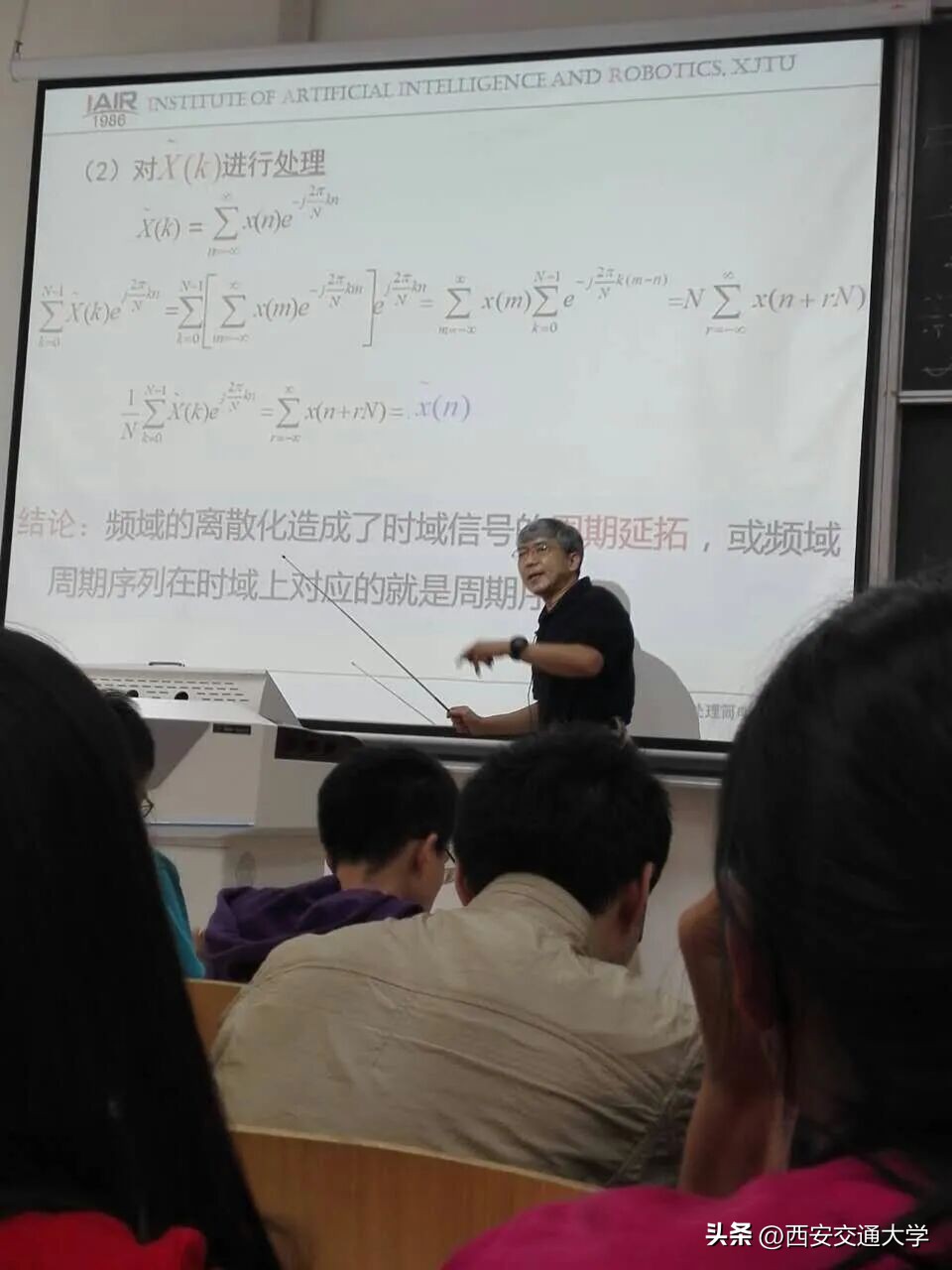
Long-term, the relaxed environment, encouraging atmosphere, and practical support at Xi’an Jiaotong University have allowed my ideas to take root, my abilities to improve, and my academic thoughts to gradually form. Jiaotong University has nourished me like a mother, giving me the strength to grow, and I deeply love it.
For future discipline construction, I have a clear vision: to make AI at Xi’an Jiaotong University a “century-old institution” rather than a fleeting phenomenon of one generation. For young scholars, I hope they can be confident, inclusive, persistent, and hardworking. I have long proposed that we have now entered the “post-Zheng era,” and I hope young teachers can carry this baton well.
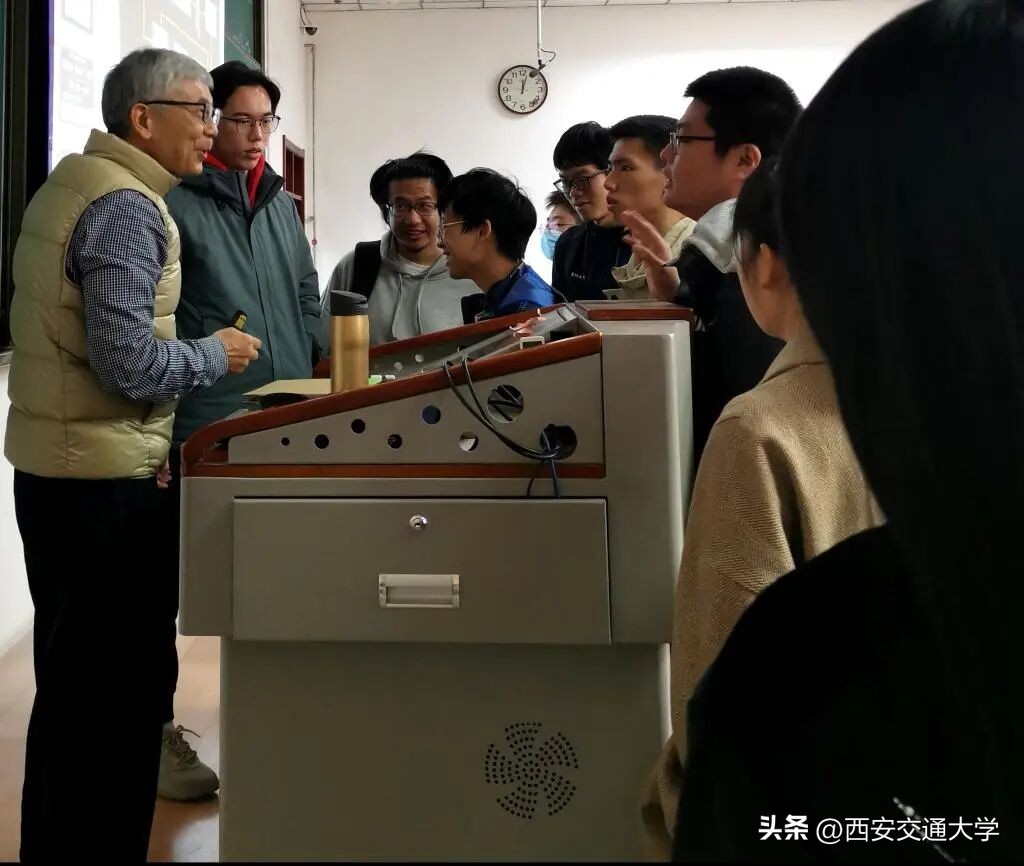
Looking ahead, the development of Xi’an Jiaotong University in the field of AI should continue to leverage its interdisciplinary advantages, focusing on the main line of “perception—cognition—collaboration” to build a research system with international influence. It is also essential to inherit the spirit of the westward migration, adhering to “rooting in the west and serving the country,” breaking through key technologies that are “stuck in the neck,” and achieving greater leaps in fundamental theories and original ideas.

Comments
Discussion is powered by Giscus (GitHub Discussions). Add
repo,repoID,category, andcategoryIDunder[params.comments.giscus]inhugo.tomlusing the values from the Giscus setup tool.